



For a lot of older adults, getting to the doctor’s office has become one of the harder parts of managing their health. Maybe transportation is an issue, or maybe a recent hospital stay has made the idea of going anywhere feel overwhelming. For people dealing with serious chronic conditions, even a routine appointment can feel like too much.
That’s the reality for many seniors in Las Vegas and Henderson — and it’s exactly why medicare-covered home health care exists.
Physicians To Home is a local practice built around a simple idea: bring the doctor to the patient, not the other way around. For eligible Medicare beneficiaries, that means receiving real medical care at home, covered under the federal health insurance program most seniors already have.
What Is Medicare Home Health Care, Actually?
There’s a lot of confusion about what Medicare home health care covers, and what it doesn’t. It’s not the same as having someone come by to help with groceries or sit with an elderly parent. Medicare home health services are medically necessary services — delivered by licensed healthcare professionals, tied to a doctor-approved plan of care, and intended to treat or manage actual health conditions.
Medicare covers these services when a patient meets specific eligibility criteria. Generally speaking, that means:
- Being enrolled in Original Medicare (Medicare Part A and/or Medicare Part B)
- Meeting the definition of homebound status
- Needing skilled care or medical oversight
- Having doctor orders that support home-based treatment
- Receiving services through a medicare-certified home health agency
Homebound doesn’t mean someone is bedridden or can never leave the house. It means that leaving home takes considerable effort — because of a recent hospital stay, mobility issues, or serious health conditions that make travel difficult. If getting to an appointment requires help from family members and significant physical strain, there’s a good chance homebound status applies.
What Services Are Covered?
This is where a lot of families are surprised by how broad the coverage actually is.
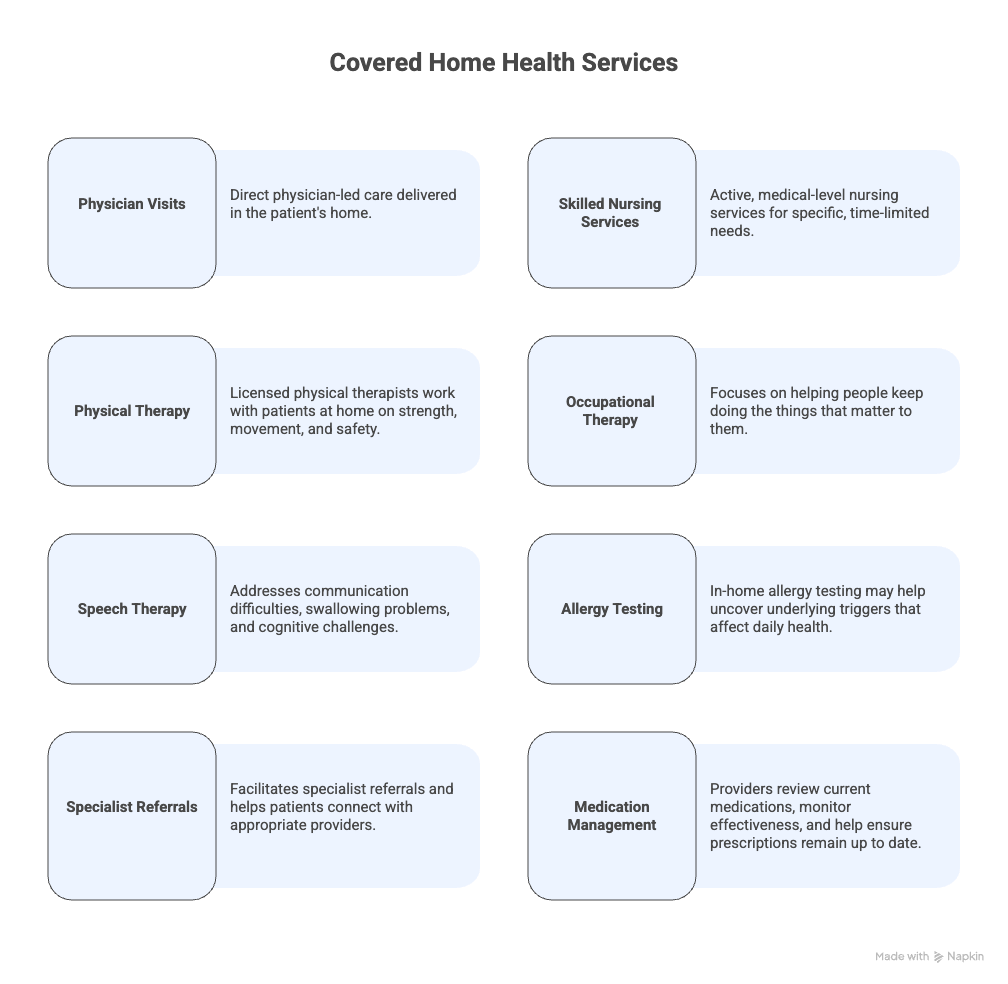
Physician Visits and Ongoing Medical Care
At Physicians To Home, the foundation of everything is direct physician-led care delivered in the patient’s home. A nurse practitioner or physician comes to you. They manage chronic conditions, review medications, handle follow-up after a hospital stay, coordinate with your other providers, and help build an individualized treatment plan. For patients who’ve been bouncing between specialists without anyone really overseeing the full picture, this kind of consistent medical care can make a real difference.
Intermittent Skilled Nursing Services
When patients need intermittent skilled nursing care — help managing medications, monitoring a chronic illness, recovering from a procedure — skilled nursing services can be added to their care plan. These are active, medical-level nursing services. They’re not about providing supervision or companionship over a long period. They address specific, time-limited medical needs, and they’re delivered by licensed nurses working under a physician’s direction.
Physical Therapy
If weakness, balance problems, or limited mobility are making daily activities harder or creating a fall risk, physical therapy may be part of the plan of care. Licensed physical therapists work with patients at home on strength, movement, and safety — all without requiring a trip to a clinic. For someone recovering from surgery or a stroke, these visits can be essential to regaining independence.
Occupational Therapy
Occupational therapists focus on helping people keep doing the things that matter to them. Getting dressed, bathing safely, moving around the house — these activities of daily living are what allow someone to stay home rather than move to a skilled nursing facility. When those abilities are threatened, occupational therapy can help patients adapt and maintain their independence.
Speech Therapy
Patients recovering from neurological events like a stroke often need speech-language pathology services. Speech-language pathologists can address communication difficulties, swallowing problems, and cognitive challenges that affect everyday life. These services can be included as part of a broader treatment plan when they’re medically necessary.
Allergy Testing
For patients dealing with ongoing symptoms that may be linked to allergies, in-home allergy testing may help uncover underlying triggers that affect daily health and comfort. Allergies can sometimes contribute to issues that are easy to overlook — recurring congestion, skin irritation, headaches, respiratory symptoms, or chronic inflammation. When appropriate, the care team can evaluate symptoms, recommend testing, and incorporate findings into a broader treatment plan designed around the patient’s overall health.
Specialist Referrals and Care Coordination
Many patients receiving care at home still need access to specialists from time to time. One of the benefits of physician-led home care is having someone oversee the bigger picture and coordinate next steps when additional expertise is needed. Physicians To Home can facilitate specialist referrals and help patients connect with appropriate providers while ensuring communication stays connected across the care team. That coordination can reduce delays, avoid duplicate testing, and make ongoing treatment easier to manage.
Prescription Refills and Medication Management
Managing medications can become complicated, especially for patients balancing multiple prescriptions or chronic conditions. During in-home visits, providers review current medications, monitor effectiveness, address side effects, and help ensure prescriptions remain up to date. When medically appropriate, prescription refills can often be handled as part of ongoing care, helping patients avoid unnecessary office visits and interruptions in treatment. Medication oversight also supports safer care and helps reduce the risk of missed doses or medication conflicts.
What About Home Health Aides?
Home health aide services are sometimes covered — but only under specific circumstances.
Medicare covers home health aides only when a patient is already receiving skilled services. Aide visits might include limited personal care services connected to the patient’s medical needs. But Medicare does not cover ongoing custodial care — help with bathing, dressing, or household tasks — as the only care being provided.
For families who need more than that, other options exist: community based services, adult day care programs, and long-term care insurance are worth exploring. Physicians To Home can often help point families in the right direction or even facilitate the relationship with a home health aide.
Understanding Medicare Coverage and Costs
Medicare often covers eligible in-home physician services, including doctor visits performed in the comfort of your home and certain medically necessary outpatient care. Patients enrolled in a Medicare Advantage (Part C) plan may also have access to additional covered benefits. Coverage depends on your individual plan and eligibility. We can help you understand your options and determine whether you qualify, or you can contact your healthcare representative if you have one.
Physicians To Home works with patients and their families to navigate this as clearly as possible, so there aren’t surprises.
It’s also worth knowing that home health care coverage is separate from hospice care, which is a different type of care with its own eligibility requirements.
Why This Matters for Las Vegas and Henderson Families
There are a lot of people in this area who haven’t been seen by a doctor in longer than they should — not because they don’t want care, but because getting to it has become too hard.
Physicians To Home exists specifically for those patients. With experienced healthcare professionals who come directly to the patient’s home, families can get consistent, high-quality care without the stress of transportation or the risk of skipped appointments.
If you think you or a loved one might qualify for medicare-covered home health services, reaching out to see whether homebound status applies is a good first step. The team at Physicians To Home can help assess eligibility, set up a care plan, and get necessary care in place — without anyone having to leave home to make it happen.